“Ooohhhh, take you ridin’ in the car, car!” Lucy doesn’t need to hear two notes from the beloved Woody Guthrie song before she leaps into the seat, tail a-wag and settles in to see the sights and smell the smells along the way. Lucy, a 3-year-old German shepherd, loves Fido Field Trips and doing zoomies in the grass at the park or in the play yard at Long Beach Animal Care Services. Volunteer Gusti said that Lucy loves spa days at the shelter best of all. “The tub is her absolute throne,” Gusti said. “She leans into the warm water and sudsy massage, considers towel time the main event, and happily snuggles in for simultaneous pets under the warm dryer.” Lucy didn’t always have such a gusto for life. When she came to the shelter, she had been clearly neglected in body and soul — she was terrified and in pain. She hid in her kennel, and Gusti said that the patient, whispered dog affirmations from volunteers Colleen and Gary finally coaxed her out and kept her out with love and play. The ideal home for Lucy would be a calm place, preferably without small kids and with a patient, kind human with a big bathtub! Lucy loves those baths, and she needs two a week to keep her skin healing. Speed the process to adopt Lucy or any of our other pets by emailing PetAdopt@longbeach.gov or petfoster@longbeach.gov. You can also call (562) 570-4925. Our shelter hours are Wednesday through Friday from 10 a.m. to 5:30 p.m. and Saturday and Sunday from 10 a.m. to 4 p.m. at 7700 E. Spring St. at the entrance to El Dorado Park (no parking fee for shelter visitors). Ask for ID#A717903.
New rescued sea otter pup Sunny & Rey the sea otter debut at Aquarium of the Pacific
An orphaned sea otter pup and an adult female sea otter have bonded and can now be seen by the public at the Aquarium of the Pacific. The two new sea otters—Rey and pup Sunny—are making their debut in their new home at the Aquarium’s Sea Otter Habitat.
Rey is approximately two and a half years old and is from an Association of Zoos and Aquariums (AZA)-accredited organization. The pup was found without her mother in Asilomar State Beach (in Monterey County), California at approximately two and a half weeks old.
The Monterey Bay Aquarium provided initial care to stabilize the pup before she was deemed nonreleasable by the U.S. Fish and Wildlife Service. Sunny was then transferred to the Aquarium of the Pacific to begin socializing with Rey, who arrived at the Aquarium before her in March 2026. “Our hope is that once they reach the age of maturity, both otters will become surrogate mothers, so that more orphaned pups have the chance to return to the ocean,” said Megan Smylie, Aquarium of the Pacific sea otter program manager.
The Aquarium of the Pacific is part of Monterey Bay Aquarium’s Sea Otter Surrogacy program, where the Aquarium’s female sea otters serve as surrogate mothers to teach rescued sea otter pups the skills need to survive in the ocean. Once pups learn the skills needed to survive in the wild, they return to Monterey Bay Aquarium for potential release. The Aquarium of the Pacific’s surrogacy pools accommodate on average four rescued sea otter pups each year. The Aquarium of the Pacific became a partner of the sea otter surrogacy program in 2020, constructed the surrogacy space, and received their first releasable sea otter pup in 2024.
The newest sea otter pup, Sunny, was named by generous donors in support of the Aquarium of the Pacific’s sea otter conservation work. The Aquarium of the Pacific invites the public to help increase the chances of survival for orphaned sea otters and recover ecosystems off the coast of California. To make a gift, please visit pacific.to/saveseaotters or call (562) 951-1701.
Southern sea otters (Enhydra lutris nereis) can be found along the coast of California, just south of San Francisco to Santa Barbara County in central California. “Every sea otter back in the ocean can make a difference. It is our hope that the rescued sea otters who go through surrogacy here will play a role in continuing to expand that population,” Smylie said. Sea otters are a keystone species in their kelp forest habitat, eating sea urchins who prey on the kelp itself to help keep the forest healthy and thriving for all the animals that call it home.
Credit: The Aquarium of the Pacific.
Paisley, May 1 Pet of the Week
Paisley has just completed her first full year at Long Beach Animal Care Services. Paisley’s an active girl with some trust issues. Even with all the attention she gets from the staff and volunteers — playtime, treats and toys, snuggles and a recent Fido Field Trip to the Seal Beach Pier and volunteer Patti’s house — spending the better part of a day cooped up in a kennel for a year is a sure way to stress out a playful doggie. The best celebration for this excuse for an anniversary is for someone to come forward and take Paisley home forever. According to Patti, Paisley will withhold judgement for about a minute and then will be your best friend forever. By the way, she’s fond of apple slices! Speed the process to adopt or foster Paisley or any of our other pets by emailing PetAdopt@longbeach.gov or petfoster@longbeach.gov. You can also call (562) 570-4925. Our shelter hours are Wednesday through Friday from 10 a.m. to 5:30 p.m. and Saturday and Sunday from 10 a.m. to 4 p.m. at 7700 E. Spring St. at the entrance to El Dorado Park (no parking fee for shelter visitors). Ask for ID#A739902.
Ruby, April 24 Pet of the Week
Ruby (ID#A752945) is indeed a jewel. She loves to run, toss her stuffies around, get people up for a game, and gently, so gently, accept treats. If you’re human and Ruby doesn’t know you, she wants to remedy that right away, and if you’re a friendly canine, she wants to get you into a game whose rules are known only to dogs. With all that energy, Ruby’s running into some problems in the kennel. She’s shown signs of kennel stress, and she needs to be out of the kennel and into a home. She’s only 2 years old and deserves to lead a full life. Want a good, loyal German shepherd buddy? Adopt or foster Ruby by emailing PetAdopt@longbeach.gov or petfoster@longbeach.gov. You can also call (562) 570-4925. Shelter hours are Wednesday through Friday from 10 a.m. to 5:30 p.m. and Saturday and Sunday from 10 a.m. to 4 p.m. at 7700 E. Spring St. at the entrance to El Dorado Park (no parking fee for shelter visitors). Ask for ID#A747689.
Aquarium mourns the loss of Ghost, the giant Pacific octopus

The Aquarium is saddened by the loss of Ghost, the giant Pacific octopus who was beloved by staff, guests, and those who learned about her online. Ghost died on March 24 after entering senescence, the natural end-of-life process after laying eggs. The Aquarium announced Ghost’s senescence online in September 2025. Ghost was resting behind the scenes while animal care and veterinary staff provided her with extra support and care during her senescence.
Ghost arrived at the Aquarium in May 2024, weighing about three pounds at the time. She had grown to over fifty pounds and was estimated to have been between two and four years old at the time of her passing. “We are going to miss her. Ghost left a big impression on us and on so many people, even those beyond our Aquarium,” said Nate Jaros, Aquarium of the Pacific vice president of animal care. “She was spirited and very charismatic and loved to interact with our animal care staff. She was very engaged with the mazes and puzzles our staff created just for her. Ghost had a preference for interacting with her aquarist caregiver, sometimes preferring these interactions over eating. She was especially inquisitive when our staff members would dive in the habitat for maintenance.”
Though senescence is part of the natural life cycle of a female octopus, Ghost’s senescence was a sad time for Aquarium staff, especially for those who formed a bond with her as they cared for her each day. The care has included hand preparing restaurant quality seafood, curating enrichment activities with her in mind, creating thoughtfully designed habitats, state-of-the-art veterinary care, and more. Ghost was a wonderful octopus and made an eight-armed impression on all our hearts. We are grateful for the outpouring of support and care for Ghost. “We hope part of her legacy is raising awareness about octopuses and inspiring people to care for and protect the ocean,” said Jaros.
Giant Pacific octopuses typically live for about two to five years. They tend to spend the majority of their lives alone. Males die within months after mating. After laying tens of thousands of eggs, female giant Pacific octopuses enter senescence. This natural process is the same whether or not the eggs are fertile and cannot be stopped or prevented by relocating the eggs. The giant Pacific octopus ranges throughout the Pacific, from the coasts of Southern California to Japan. Like other species of octopuses, they have special pigment cells called chromatophores in their skin that allow them to change colors and camouflage. With their pigment cells, they can mimic surrounding colors and textures.
Credit: The Aquarium of the Pacific.
Wedge, Jan 23 Pet of the Week
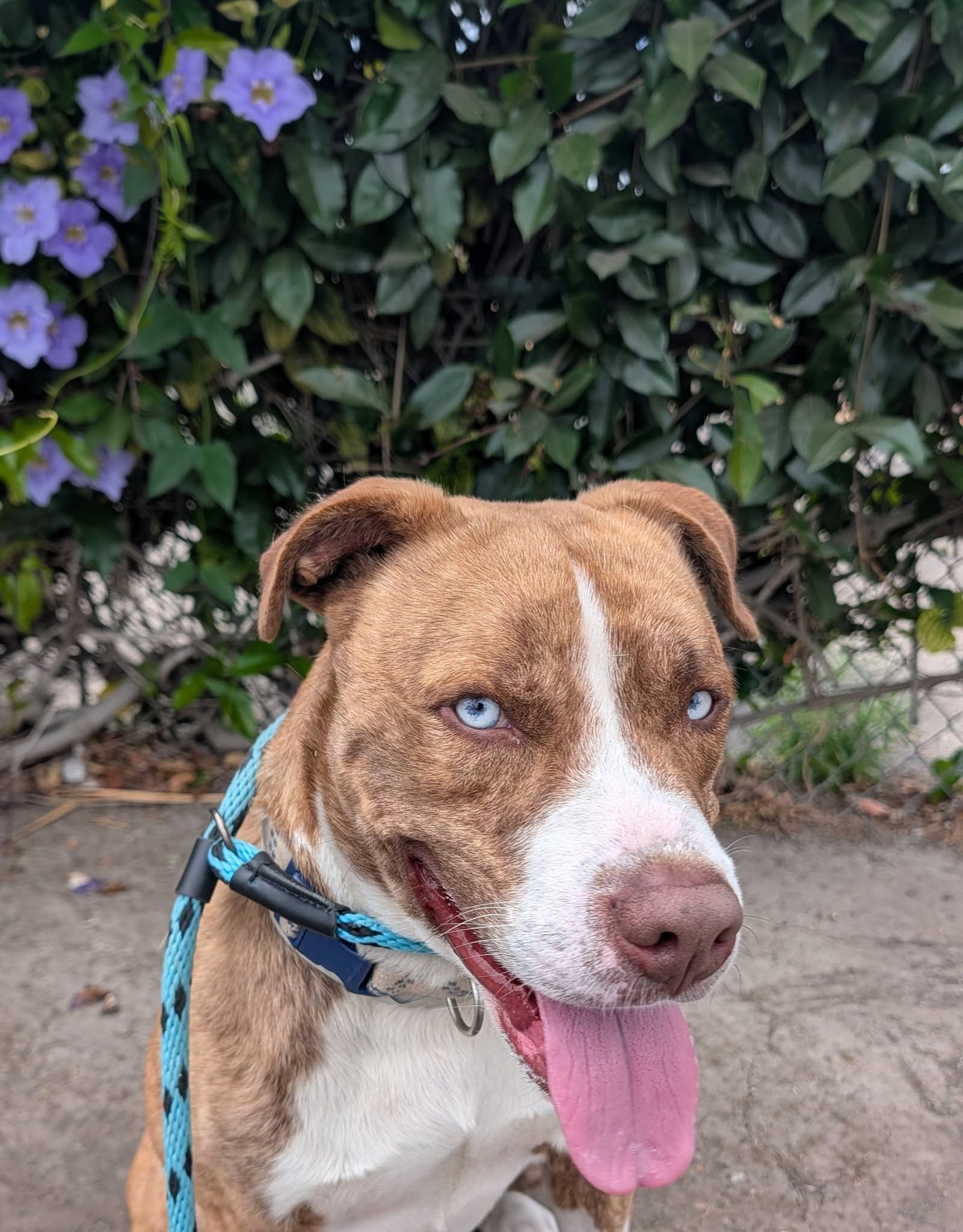
Will ya look at Wedge, all dressed up and ready to play kissy-face in a big way! Wedge’s tongue is as big as his personality — he’s a goofy, playful German shepherd mix just out of puppyhood. The volunteers and staff love him, and he’s had successful meetups with families that included rambunctious children. Wedge really likes kids and other dogs as well! He knows his basic commands, loves to play, and is ready to be the family dog. How about yours? The shelter’s way over capacity with dogs, so speed the process to adopt or foster Wedge or any of our other pets by emailing PetAdopt@longbeach.gov or petfoster@longbeach.gov. You can also call (562) 570-4925. Our shelter hours are Wednesday through Friday from 10 a.m. to 5:30 p.m. and Saturday and Sunday from 10 a.m. to 4 p.m. at 7700 E. Spring St. at the entrance to El Dorado Park (no parking fee for shelter visitors). Ask for ID#A744861.
Diesela, New Year’s Day Pet of the Week
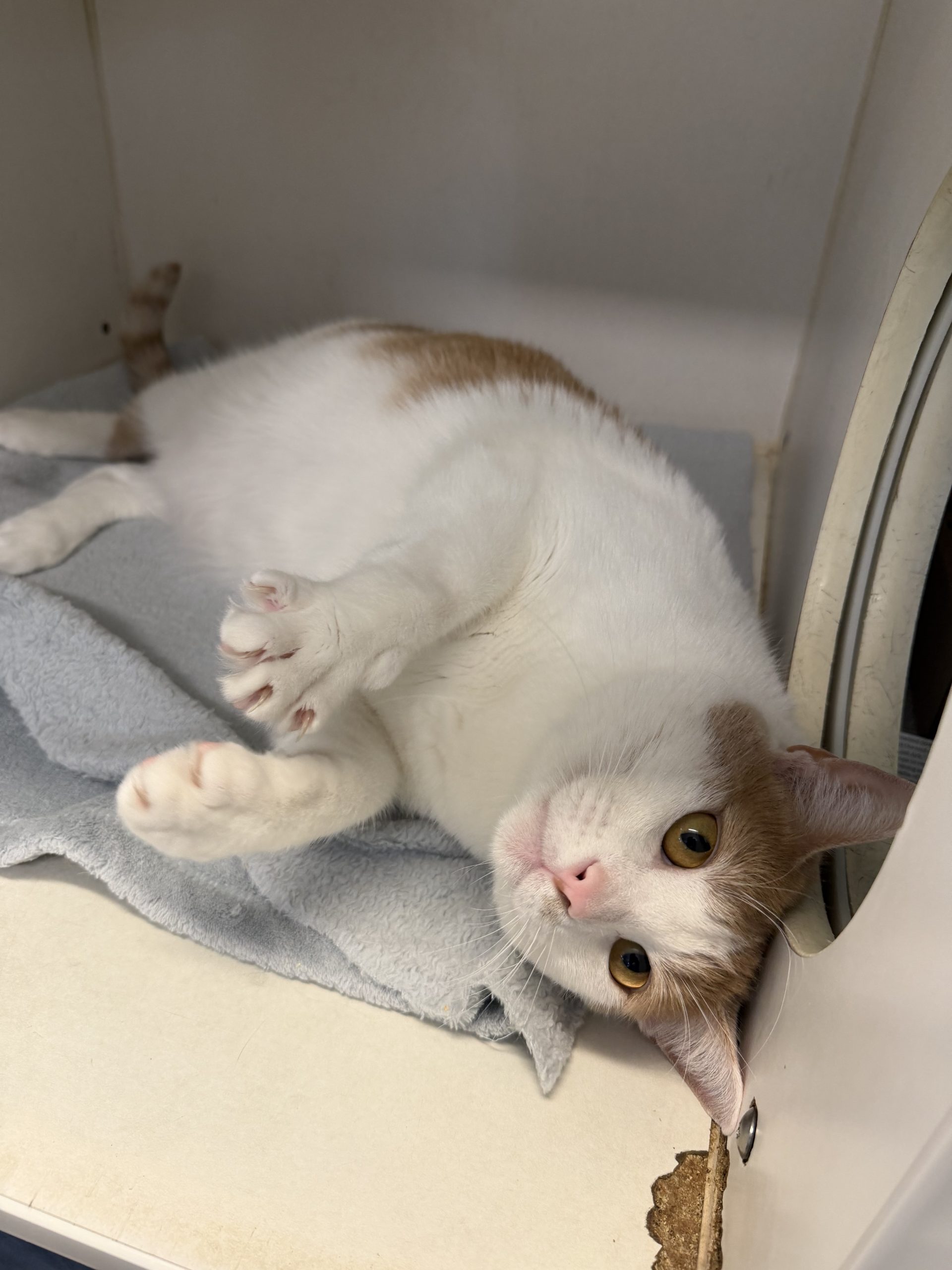
A few weeks ago, Long Beach Animal Care Services took in over 70 cats from a hoarding situation. Diesela, a pretty 2-year-old brown tabby, was one of them. It took her a little while to get used to her new situation—a kennel all to herself and a number of admiring volunteers, staff members and visitors, all wanting to pet her and hold her. She was shy and scared at first, but now, she’ll walk right onto a lap and insist on attention! If you own a lap that’s just asking for a cat, Diesela’s your girl! Make a New Year’s resolution to adopt or foster her! To do that, email PetAdopt@longbeach.gov to speed the process, or call (562) 570-7387. Better yet, meet her in person at Long Beach Animal Care Services, 7700 E. Spring St., Long Beach, at entrance to El Dorado Park (no parking fee for shelter visitors). Visiting hours are Wednesday–Friday, 10 a.m.–5:30 p.m., and Saturday–Sunday, 10 a.m.–4 p.m. Ask for ID#A752258.
Bandit, Dec. 26 Pet of the Week
“Hey, Santy! It’s me, Bandit! I was hoping that you’d ask me to help pull the sleigh this year—huskies are very good at this, you know. But I realized that you knew full well that the minute you stopped at the right home for me, I’d beat you down the chimney or however you get in, curl up under the tree, and refuse to leave.” Bandit’s correct. He’s been kenneled for over a year now, and despite the walks and Fido Field Trip breaks, he’s still there. He’s a good boy—he plays well with other dogs with similar energy and strolls slowly on leash, never pulling the walker along. He’s 5 years old and needs a home with humans familiar with the breed who’ll give him the late holiday gift of a forever and ever home. Speed the process to adopt or foster Bandit or any of our other pets by emailing PetAdopt@longbeach.gov or petfoster@longbeach.gov. You can also call (562) 570-4925. Our shelter hours are Wednesday through Friday from 10 a.m. to 5:30 p.m. and Saturday and Sunday from 10 a.m. to 4 p.m. at 7700 E. Spring St. at the entrance to El Dorado Park (no parking fee for shelter visitors). Ask for ID#A724562.